
Introduction: Why Local SEO Matters More Than Ever
Whether you’re helping a small business or running one, appearing in local search results has become essential. Customers today don’t browse directories they search:
- “best coffee shop near me”
- “pet grooming open now”
- “bookstore downtown”
And Google decides which businesses they see.
Local SEO is how small businesses:
✔ Outrank competitors
✔ Show up on Google Maps
✔ Get more reviews
✔ Increase foot traffic & calls
✔ Build trust in their target city or neighborhood
In this guide, you’ll learn agency-level strategies you can apply immediately to rank a small business higher in local search.
Local SEO Strategies Every Small Business Should Use in 2026
1. Optimize Your Google Business Profile (GBP) Completely
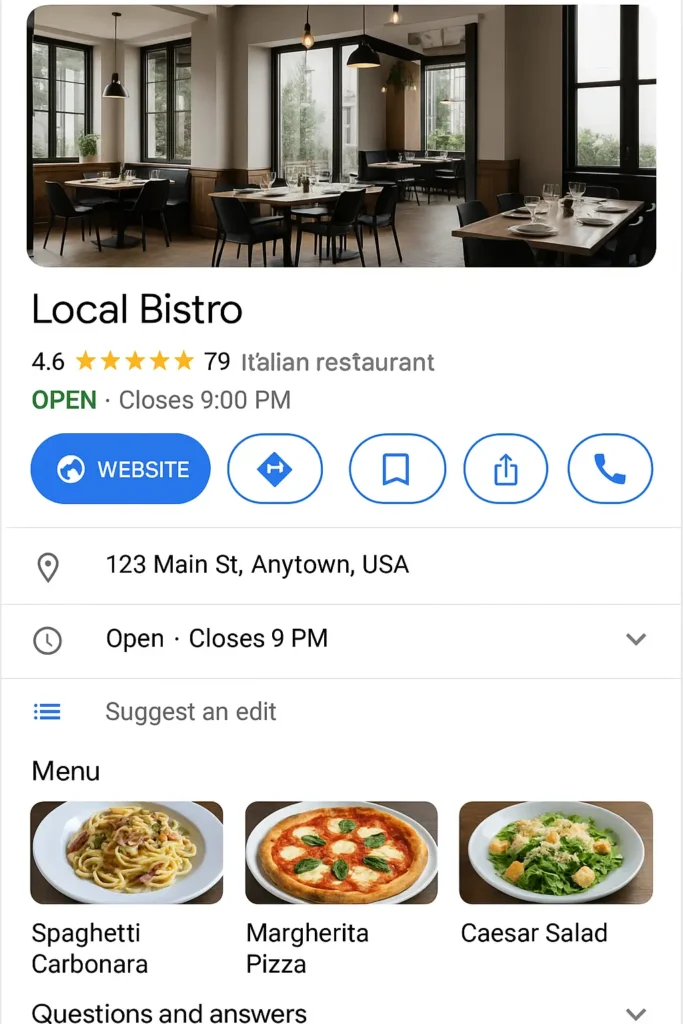
Google Business Profile is the MOST important ranking factor for local search.
Checklist to optimize:
- Use the exact business name
- Add correct address, phone, website
- Choose accurate categories
- Upload high-quality photos
- Add services/products
- Add business attributes (open hours, wheelchair access, etc.)
- Enable messaging
- Post weekly updates
- Add FAQs in Q&A section
Why this matters:
Google displays GBP listings above websites for most local-intent searches.
Use this restaurant-specific SEO checklist if you’re in the food industry.
2. Maintain NAP Consistency Across the Web
NAP = Name, Address, Phone.
Google checks whether your business information is consistent everywhere.
Inconsistencies confuse search engines and reduce local ranking.
Ensure NAP matches across:
- Website
- Google Business Profile
- Yelp
- Apple Maps
- Local directories
- Business listings
Tools that help: BrightLocal, Moz Local, Whitespark.
3. Optimize Your Website for Local Search
Local SEO isn’t only about Google Maps your website also sends ranking signals.
Website must include:
- Complete contact details
- Clickable phone number
- Embedded Google Maps
- Location-based keywords
- Local business schema
- Separate service pages if offering multiple services
- Testimonials and reviews
- Mobile-friendly design
- Fast loading speed (< 3 seconds)
Local On-Page SEO Tips
- Add your city/region in meta titles
- Add service-based keywords
- Include customer FAQs
- Use headings that mention the service + location
Example: “Affordable Carpet Cleaning Services in Brooklyn”
4. Conduct Local Keyword Research
Small businesses must target keywords customers actually search for.
Local keyword categories:
A. Service + Location
- “plumber in Boston”
- “dentist near Times Square”
B. “Near Me” searches
- “cafes near me”
- “gym near me open now”
C. Problem-based keywords
- “emergency electrician”
- “same-day flower delivery”
D. Long-tail keywords
- “best vegan bakery in downtown LA”
- “affordable wedding photography Sacramento”
Recommended Tools:
Google Keyword Planner, Ahrefs, Semrush, UberSuggest, Google Trends.
5. Build High-Quality Local Citations
Citations help search engines verify your business.
Submit to:
- Yelp
- Bing Places
- Apple Maps
- YellowPages
- BBB
- Local Chamber of Commerce
- Industry-specific directories
- Local blogs & business listings
Pro Tip:
Keep descriptions and categories consistent.
6. Generate and Manage Reviews
Reviews are a major ranking factor.
Focus on:
- Google reviews
- Yelp reviews
- Facebook reviews
How to earn more reviews:
- Ask customers directly
- Send follow-up emails
- Provide QR codes at your location
- Automate review requests
Responding to reviews:
- Thank positive reviewers
- Address negative ones professionally
- Answer questions publicly
7. Publish Local Content That Builds Authority
Small businesses should create content that serves their community.
Content ideas:
- “Best things to do in [City] this weekend”
- “How to choose a reliable [service] in [City]”
- “Local customer success stories”
- “Upcoming events we’re participating in”
This builds trust and improves keyword relevance.
8. Add Local Business Schema (Structured Data)
Schema markup helps Google understand:
- Business type
- Location
- Reviews
- Services
- Opening hours
Suggested Schema Types:
- Local Business
- FAQ
- Product/Service
- Review schema (if allowed)
This increases chances of rich results.
9. Build Local Backlinks for Authority
High-quality backlinks improve ranking.
Best sources:
- Local bloggers
- News websites
- Community organizations
- Local event sponsorships
- Schools & nonprofits
- Business associations
Examples:
- Sponsor a local event → get a link
- Offer expert quotes for journalists in your field
- Partner with complementary businesses
10. Use Social Media to Strengthen Local Signals
While not a direct ranking factor, social signals boost:
- Brand awareness
- Engagement
- Search volume for your business name
Platforms to focus on:
- LinkedIn (for service-based businesses)
- TikTok (for lifestyle brands)
11. Track Local SEO Performance
Monitoring performance ensures growth.
Track in:
- Google Business Profile Insights
- calls
- website clicks
- direction requests
- photo views
- Google Analytics
- traffic sources
- user behavior
- conversions
- Google Search Console
- search queries
- ranking positions
- impressions
- Local rank tracking tools
- BrightLocal
- Local Falcon
- GeoRanker
Conclusion: Local SEO Is a Continuous Growth System
Local SEO is not a one-time action it’s an ongoing strategy that strengthens your business visibility and trust.
By following these strategies consistently, small businesses can:
✔ Rank higher
✔ Get more leads
✔ Increase foot traffic
✔ Build a strong online reputation
If you’re helping clients or managing your own business, these strategies will position you far ahead of competitors.
